|
||||||||||||||||||||
|
||||||||||||||||||||
|
|
||||||||||||||||||||
|
Our milk is 100% Nigerian Dwarf Goat's milk. This miniature breed has the highest butterfat of any goat breed. Our herd regularly averages over 8% butterfat and over 5% Protein. In addition to this, DNA testing on our herdsires and foundation does proved showed our goats (and probably all Nigerians) have a double allele for producing a high quantity of alpha S1 casein in their milk. This is the "cheese" protein. A high percentage of alpha S1 leads to higher yield. This makes for a cheese that is unsurpassable in dense, rich character. Our milk changes seasonally with the native browse that the does are eating. During some seasons they favor one plant over another; in the fall they prefer the wild grape leaves that are just turning bronze, the newly shed leaves of the madrone tree in late summer are consumed with relish, and in the spring wildflowers and budding white oak leaves are sought after. This variety of diet leads not only to greater health and contentment (not to mention the hikes out to get the the browse leading to strength and stamina), but it also leads to increased character in the milk that changes throughout the year. The cheeses reflect this variety. We like to say, "We never make the exact same cheese twice." |
||||||||||||||||||||
|
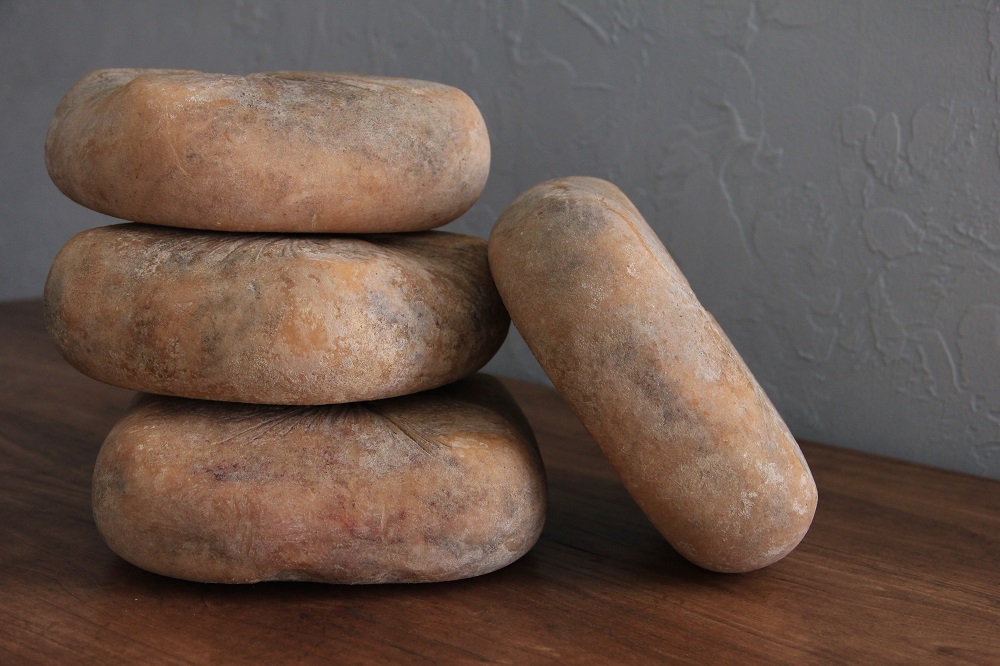
From the time one of our small batch handmade wheels is "born" to its maturity months later, Pholia cheeses undergo an intense period of love and care. Wheels are turned and inspected, brushed, bathed and pampered. Elk Mountain wheels receive regular washings with a locally brewed pale ale; Hillis Peak is rubbed with a mixture of olive/veg oil and sweet paprika to help protect it from drying and add character; and Covered Bridge is allowed to develop naturally with regular brushing of the wild and native molds that grow during aging. These wild molds vary with the season as well and we work with them to enhance the rind and aging of the cheeses. Wimer Winter is washed with brine that encourages native, wild b. linens to grow, giving the rind it's color, texture and aroma. By the time it reaches market, each wheel of our cheese has had hours of care and attention to help it achieve it's peak. |
||||||||||||||||||||
|
Cheese is a complicated food with the potential to inspire and satisfy. To start, or continue, on the journey we recommend the following books and links for your cheesey edification. For Chef's wanting to create the best Cheese Plate or Board for your restaurant, these books are must-haves. For lovers of fine cheese, they are affirmations of your passion and a reference and resource. "The Cheese Plate" Max McCalman and David Gibbons Buy At Amazon.com "Cheese: A Connoiseure's Guide" Max McCalman and David Gibbons Buy At Amazon.com We offer cheesemaking classes for beginners and up. Call for a schedule and price. |
||||||||||||||||||||
|
Rogue Creamery, Central Point Oregon Cowgirl Creamery, San Francisco Foster and Dobbs, Portland, Or Slough Food, Bow, WA
|
||||||||||||||||||||
|
Whole wheels can be shipped to customers anywhere in the US. If shipped Sept-June, can go USPS priority mail for the best cost. Whole wheel discount of 10%. |
||||||||||||||||||||
|
So, You want to be a Licensed Cheesemaker? 1. Love the species you plan to milk! It is the only way to survive the long hours milking and delivering babies without resentment. 2. Own and manage the animals for long enough to get very good at your herd management before you start your business. 3. Learn to make cheese really well BEFORE you get your license! It will save you lots of wasted or poor product. 4. Don't let anyone tell you that being a cheesemaker is 80% clean up and dishes. By the time you factor in hours milking, hours feeding babies, hours getting up during the night to check on delivering mom's, hours cleaning pens, etc, then it will only be about 20% of the work! 5. Read every book possible on cheesemaking (especially this one: http://www.chelseagreen.com/2005/items/americanfarmsteadcheese/Preface before you call other cheesemakers to pick their brains. If you do your research first, more of the licensed cheesemakers will be willing to help. 6. Always consult your state inspector BEFORE starting any construction. If you bring them on-line early, everything will go smoother. 7. Take everyone's skepticism as a test to see if you are really determined and meant to really be a licensed cheesemaker- for the long run . See New-Cheesemaker Tutoring for one-on-one farmstead cheesemaker classes
|
||||||||||||||||||||
|
Pholia Farm, 9115 West Evans Cr. Rd, Rogue River, Oregon, 97537 Phone: : , Dairy/Home: 541-582-8883 FAX: 541-582-0984 E-Mail Click |